Are you struggling to manage your content across multiple platforms? A robust Content Management System (CMS) can handle a lot of data without compromising performance and user experience. In this digital age, speed, flexibility, and cross-platform consistency are necessary, and that is where a headless CMS plays an important role.
Choosing the right CMS directly affects your content strategy, and you can get it from a professional platform, Web Dev Studioz. In this blog, we will discuss the main difference between a Headless CMS and a traditional CMS. We will explain how a professional platform can help businesses adapt and grow with the right technology stack.
What is a Headless CMS?
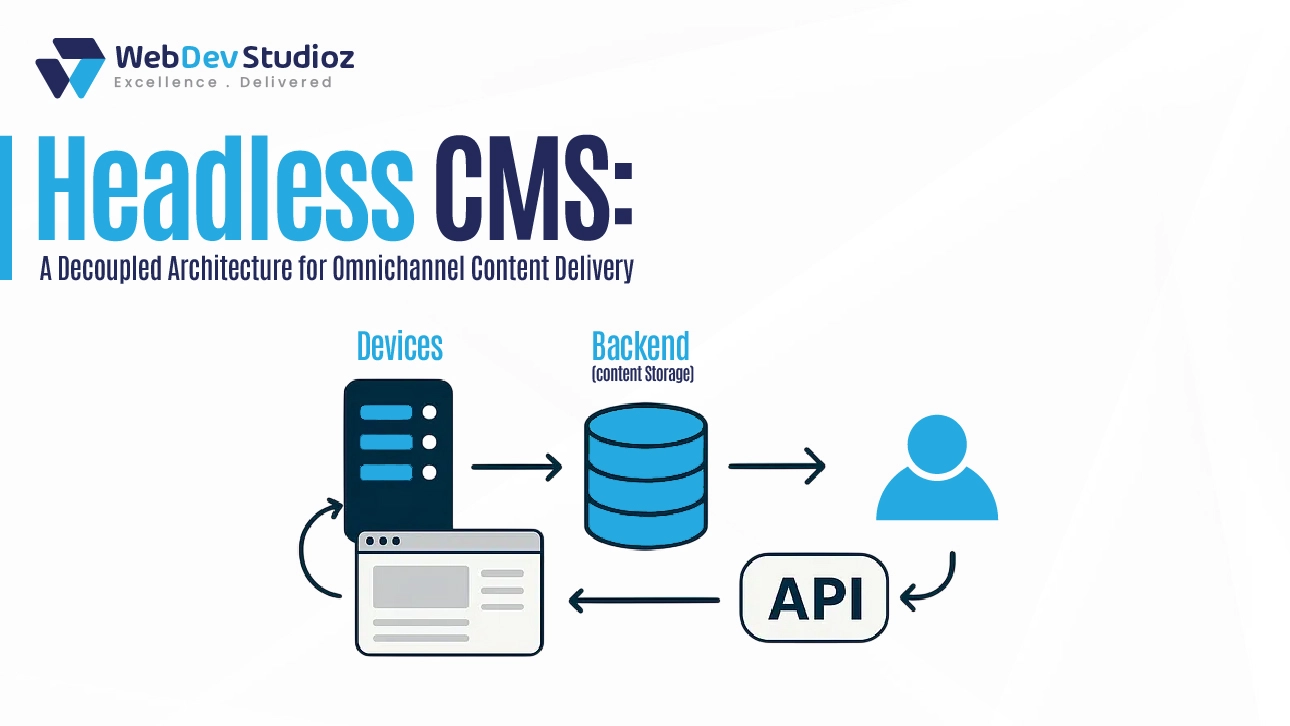
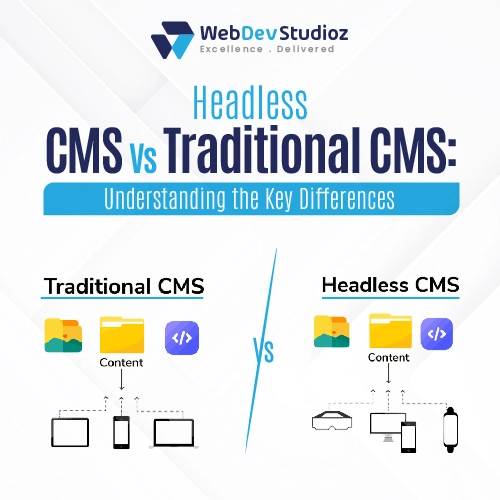
Before diving into the comparison of different types of CMS, you should know exactly what a headless CMS is. It is a content management system where the backend (content storage and management) is separated, or “decoupled,” from the frontend (content presentation layer).
This architecture gives developers complete freedom to deliver content on any platform. For example, delivery of content not only on websites but also on mobile apps, smartwatches, IoT devices, and more.
Key Features of a Headless CMS
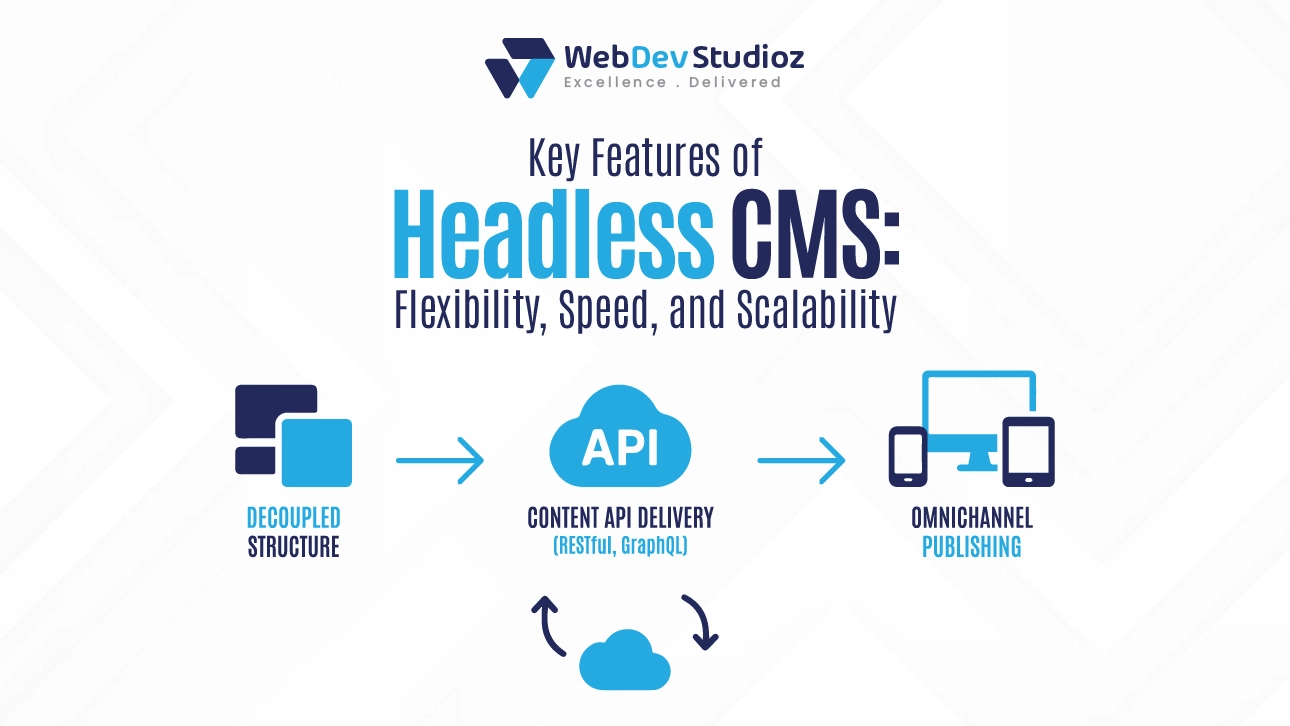
Let us consider some key features of a headless CMS:
Decoupled Structure
The main feature of this CMS is its decoupled structure. As the name headless shows, the “head” (frontend) is removed from the body (backend), allowing content to be delivered via APIs to any digital interface.
Content API Delivery
Content delivery is the key task of any CMS. In this category, content is retrieved through RESTful or GraphQL APIs. Retrieving enables real-time and structured content delivery. Content delivery is the key task of any CMS. In this category, content is retrieved through RESTful or GraphQL APIs. Retrieving enables real-time and structured content delivery. You can streamline and scale this process with expert API development for CMS architectures.
Omnichannel Publishing
Content can be published across multiple channels such as websites, mobile applications, AR/VR, and digital signage. You can publish content without being locked into a specific front end.
Headless CMS is a modern strategy to manage content that gives a fast and scalable experience to businesses.